Production Reference
We don't just ship fabric and disappear. Here is a real order, documented from purchase order to finished garments — including what we did on the ground.
3,500 shearling jackets for a Korean brand
Fabric supply → cutting → sewing → finished goods, all verified on site
The brand had already chosen its garment factory in China. We supplied the fabric and stayed with the order through cutting and sewing. Two colorways, 3,500 pieces total.
- 01ORDER
The brand locks the spec and quantities
The brand confirmed two shearling colorways for the season and placed the order with its Chinese garment factory: 1,000 pieces in dark brown, 2,500 in camel. Confirmed hanger weight: 1,850 g and 1,600 g per piece.
Our job at this stage is the fabric. Before anything is committed, we verify one thing in the Keqiao market: can this exact spec be secured reliably at production volume? Anyone can produce one sample yard. Matching 3,500 garments to the same color and hand-feel is a different job entirely.
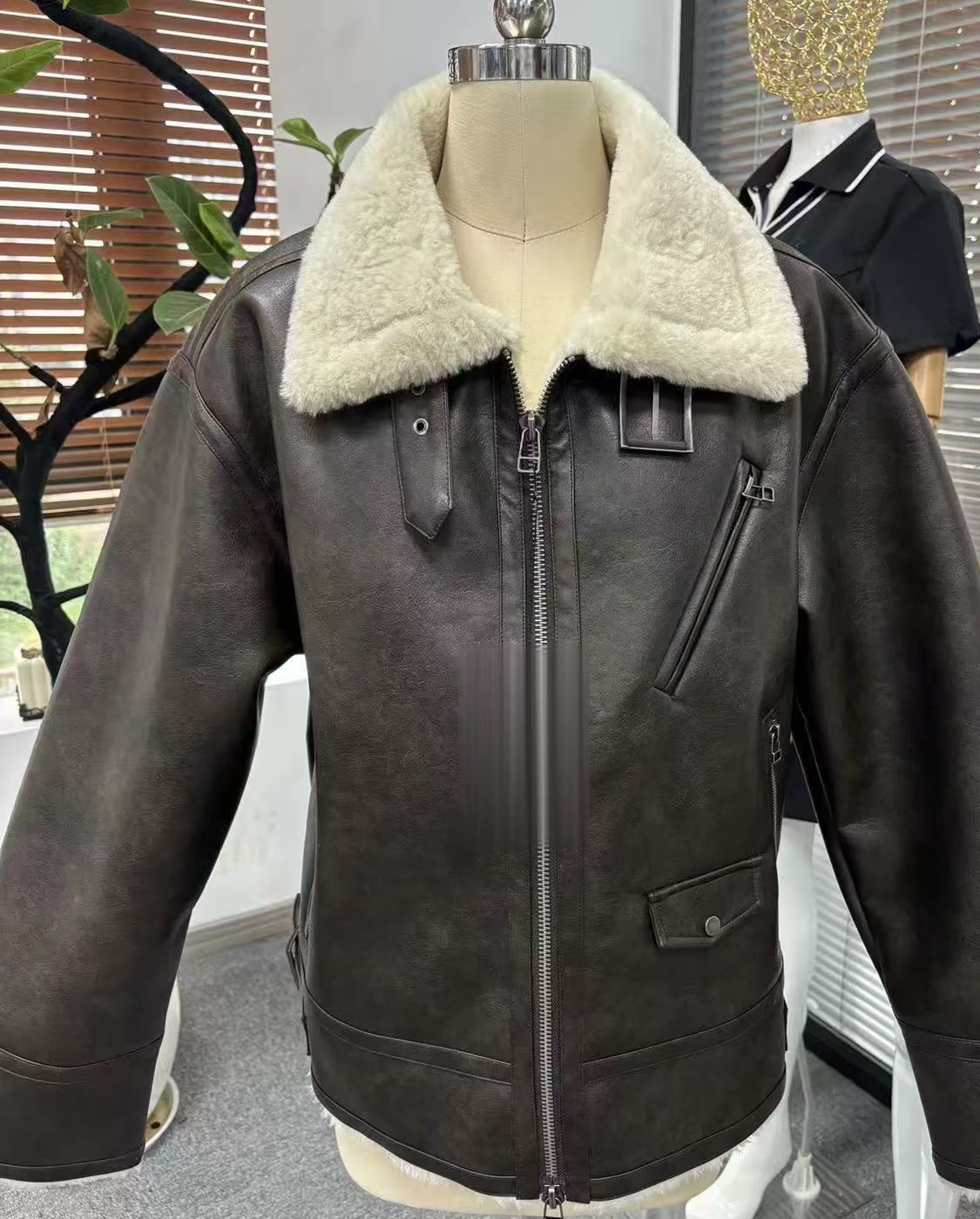
Dark brown · 1,000 pcs confirmed 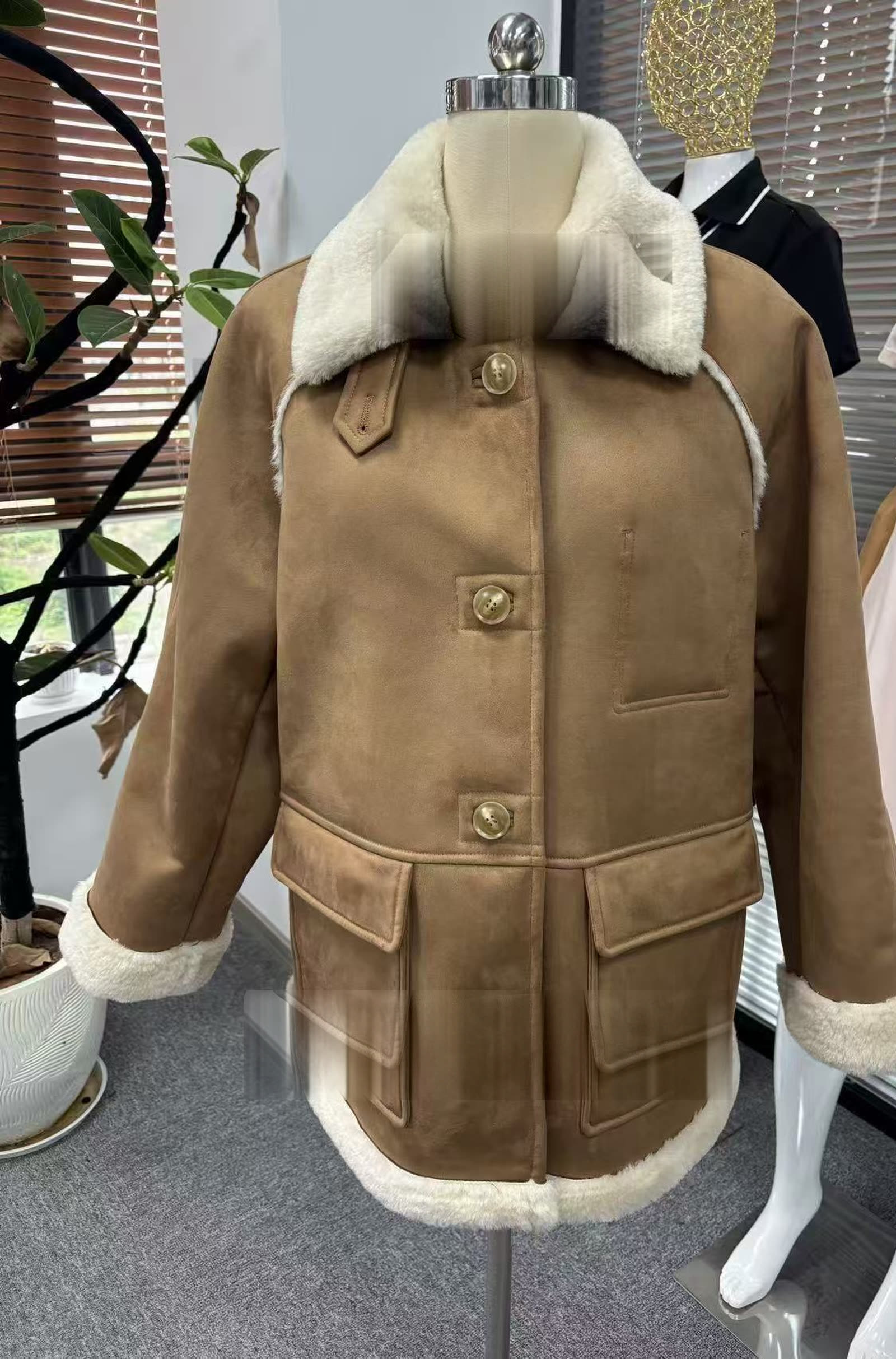
Camel · 2,500 pcs confirmed - 02FABRIC
Fabric for 3,500 garments, shipped in one lot
We sourced and inspected the fabric in Keqiao, then delivered it straight to the brand's garment factory. The photo below is this order loaded for dispatch.
The biggest risk in bulk fabric is dye-lot variation. The same article number split across lots means visible color differences in the finished garments — and you only see it after the clothes are hanging side by side in a store. That's why we secure production volume from a single lot and ship it in one go. Topping up "the rest" later is the most common cause of color disasters.
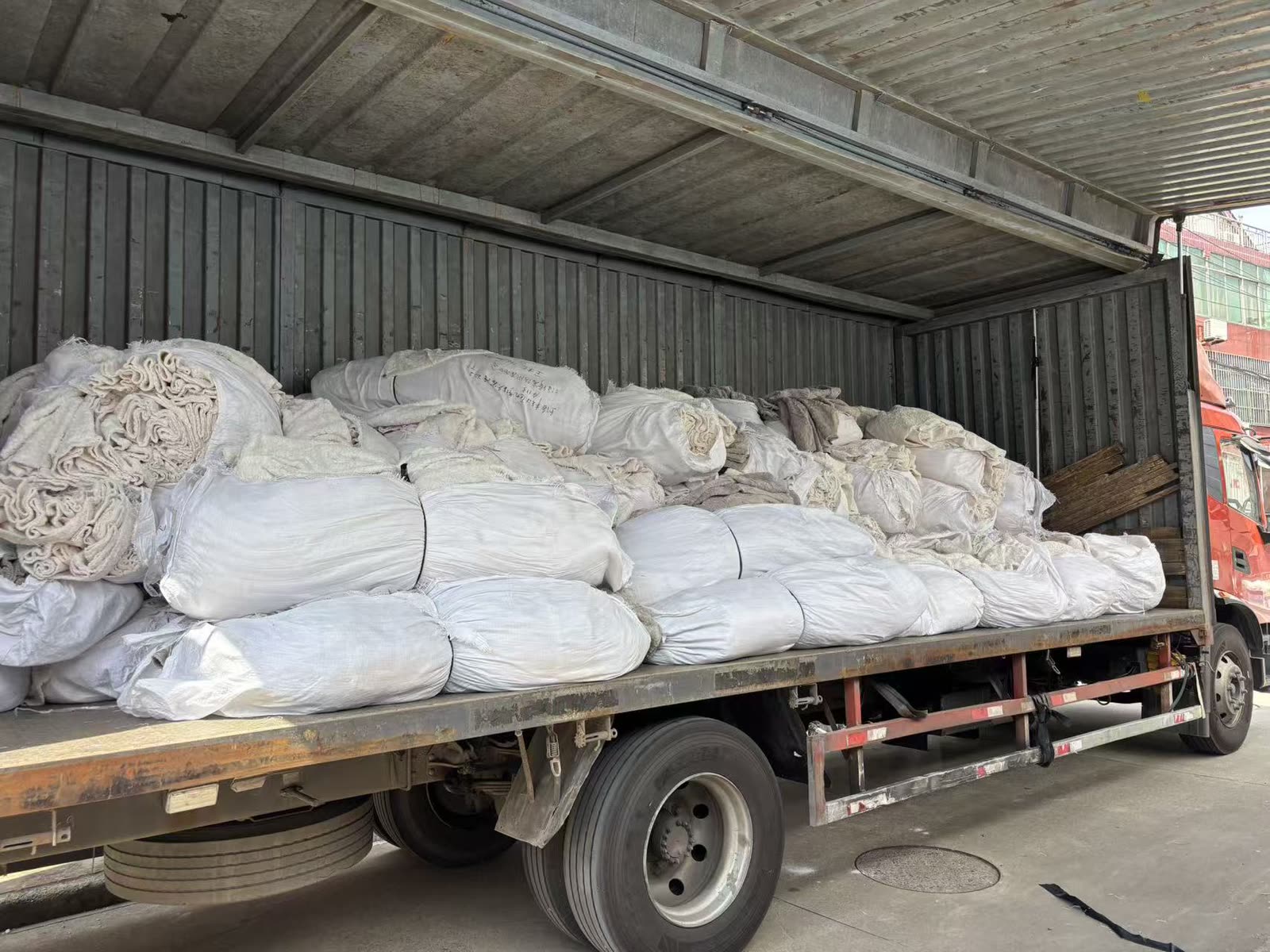
Inspected fabric, shipped directly to the assigned factory - 03CUTTING
Automated cutting at the brand's factory
Once the fabric arrived, the factory laid the CAD markers and ran automated cutting. The two colors in the videos are the two you saw above.
Shearling is trickier to cut than regular wovens: the fabric is thick and the fleece backing shifts. Stack too many plies and the lower panels drift off pattern. So the factory cuts fewer plies and lets the fabric fully relax first — sacrificing a little yield beats scrapping panels of expensive fabric.
Dark brown — automated cutting Camel — cutting and panel bundling - 04BULK PRODUCTION
Sewing lines, and the finished goods
Cut panels moved into sewing, and finished jackets came off the line onto the overhead rail, waiting for dispatch. The video shows this order — both colors running together.
If a fabric supplier hands over the goods and walks away, nobody can answer the important question when something goes wrong later: was it the fabric or the sewing? So for orders where we supply the fabric, we also check in on cutting and sewing. If a problem comes from the fabric, we need to be the first to know. If it doesn't, we should be able to say so with evidence.
Finished goods on the rail — both colorways in production
How we worked on this order
- Your factory stays your factory. We supplied fabric into the brand's existing production line — no need to switch manufacturers to switch fabric suppliers.
- One desk from first swatch to thousands of garments' worth of fabric.
- Production volume secured from a single dye lot, inspected before dispatch.
- Specs the market doesn't stock get woven and dyed to order — no upper limit.
Published with the brand's consent. Brand name, article numbers, prices and factory identity have been removed.
Planning a production run?
One fabric photo or a physical swatch is enough to start. It's fine if quantities aren't final yet.
WeChat KQFABRIC · Email [email protected]